Worlds smallest 3D printing pen was created by London based company called LIX . That small pen enable its user to create prototypes, caligraphy, accessories in the air within secounds. The pen works very similar to 3D printers, it melts and cools colour plastic. More information on LIX pen
The future is here is currently exhibiting at design museum in London. It's a collection of furniture available to be downloaded for free through the creative common licence. Opendesk collection approaches creative community in all backgrounds through the internet to produce furniture using CNC-machines from the files on their website. You can be as much involve as you want, it's more like DIY project, choosing files, materials, production style for constructing your pieces of furniture.
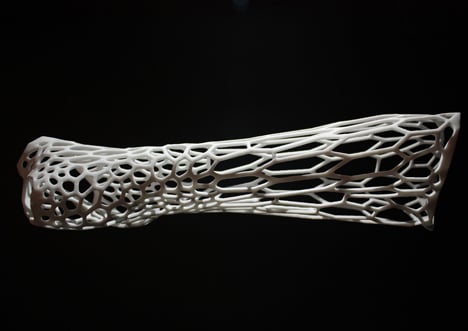
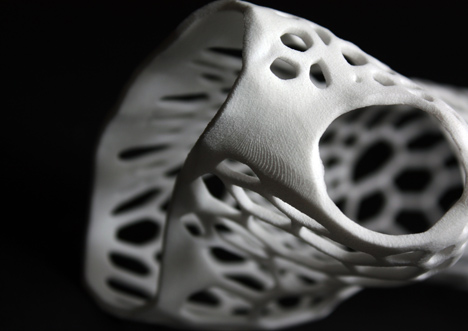
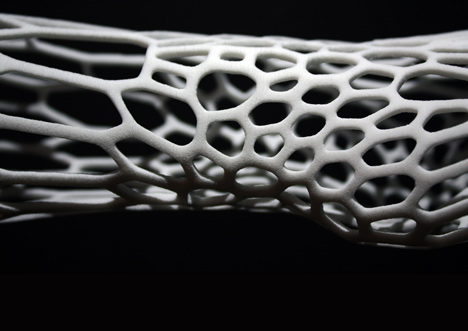
3D-printed casts for fractured bones fiberglass prototype designed by Victoria University of Wellington graduate Jake Evill. The prototype Cortex cast is lightweight, fully ventilated, shower friendly, recyclable, stylish, hygienic, washable and thin enough to fit under a shirt sleeve.
A patient would have the bones x-rayed and the outside of the limb 3D-scanned. Computer software would then determine the optimum bespoke shape, with denser support focussed around the fracture itself.
The polyamide pieces would be printed on-site and clip into place with fastenings that can't be undone until the healing process is complete, when they would be taken off with tools at the hospitalas normal. Unlike current casts, the materials could then be recycled. "At the moment, 3D printing of the cast takes around three hours whereas a plaster cast is three to nine minutes, but requires 24-72 hours to be fully set," says the designer. "With the improvement of 3D printing, we could see a big reduction in the time it takes to print in the future."
Is that the end of bulky, itchy and smelly plaster?
Cześć, jestem Magda. Architektka wnętrz
i miłośniczka mid-century modern style.
Design or Breakfast to moje miejsce w sieci, ale w nowej odsłonie, gdzie będę pokazywać piękne wnętrza, metamorfozy wnętrzarskie oraz moje wizualne eksperymenty z AI.
Czasami zaglądniemy też do mojego warzywnika- miejsca, w którym wracam do natury i odcinam się od telefonu i social mediów.
To blog o wnętrzach, kreatywności i estetyce codzienności. Spodziewajcie się niespodziewanego!